More energy-efficient homes in London
Closed
1089 responses | 09/01/2024 - 18/02/2024
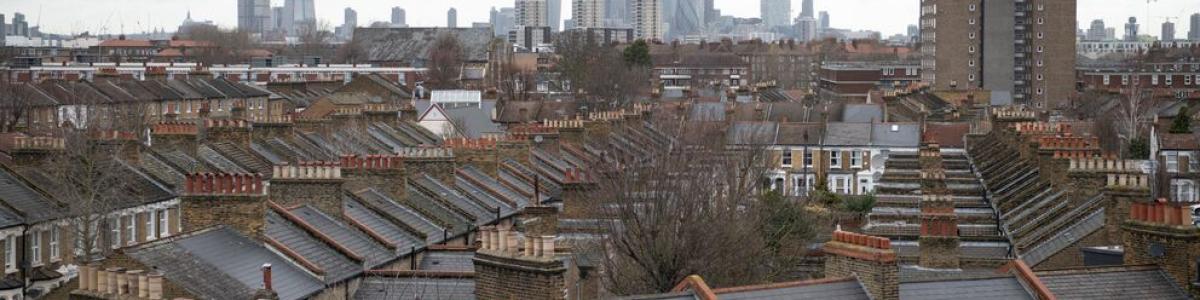
Heating London homes sustainably

The Mayor has an ambitious target for London to reach net zero by 2030.
Net zero is the idea of reducing our carbon dioxide emissions down to zero. In other words, the amount of harmful emissions we add to the atmosphere should be equal to or less than what we take out.
Did you know that heating homes and buildings with oil, gas or coal produces the biggest source of carbon emissions in the UK?
City Hall is working with local councils to create Local Area Energy Plans. These plans set out how your local council can help reach net zero. It will include the views of experts and Londoners, and explore more sustainable solutions.
Join in the discussion below and help shape your Local Area Energy Plan.
- After taking our survey, which energy-efficiency measures would you most likely consider for your home, and why?
- Imagine you were to upgrade or replace your current heating system to make it more energy efficient - perhaps you already have. What are the main challenges or barriers you could think of? What would help mitigate these?
- Heat networks (also known as district heating) supply heat from a central source to consumers, via a network of underground pipes carrying hot water. Would you like your borough to install a heat network? Why or why not?
- Anything else you’d like to share on this topic?
This discussion is co-moderated by Emma and Isobel from City Hall's Infrastructure team.
The discussion ran from 09 January 2024 - 18 February 2024
Closed
Other opportunities to have your say
 New
New
London’s AI future
Artificial intelligence (AI) is changing how we live and work. Share your experience and ideas and help us shape London’s AI future.
Discussion | Open
 New
New
AI and jobs
Help inform the Mayor's AI and Jobs Taskforce. Tell us about your experience of AI at work and in daily life.
Survey | Open
Want to join our next discussion?
New here? Join Talk London, City Hall's online community where you can have your say on London's biggest issues.
Join Talk LondonAlready have an account?
Log into your accountLinda51
Community Member 2 years agoPlease consider leasehold flats where landlord may ignore the question, refuse permission or generate excessive costs passed on to tenants
cls
Community Member 2 years agoPlease consider the needs of flats that rely on communal central heating and communal boiler. Residents and owners can’t even decide when the heating is switched on and off. Changing windows to double glazing requires planning permission on...
Show full commentPlease consider the needs of flats that rely on communal central heating and communal boiler. Residents and owners can’t even decide when the heating is switched on and off. Changing windows to double glazing requires planning permission on behalf of the whole block and individual flats cannot upgrade their windows to double glazing if they want to unless the whole block agrees. Owners who want to move away from the very expensive and very energy consuming communal heating system can’t do this due to the lease. This has to change.
Show less of commentCedders
Community Member 2 years agoNot having control of your own heating is frustrating. These could and should also be replaced with zoned systems.
Churchman
Community Member 2 years agoThe doubleglazing catch 22 is one of the matters that demonstrates the madness of all this. Live in a house that would benefit from it, but then you're prevented from putting it in by planning laws, and you lose out every which way.
moretree5
Community Member 2 years agoI have double glazing but I would like triple glazing. At the time I was refurbishing my home and didn't have the budget for it, and it wasn't available. The windows were ... in urgent need of replacement.
Show full commentI have double glazing but I would like triple glazing. At the time I was refurbishing my home and didn't have the budget for it, and it wasn't available. The windows were ... in urgent need of replacement.
Show less of commentAlanPPPP
Community Member 2 years agoInsulation and thereby reducing energy demand in total has got to be the sensible way forward. Reducing demand reduces bills, reduces the peak stresses on the network, reduces the total peak energy generation required and means we won't...
Show full commentInsulation and thereby reducing energy demand in total has got to be the sensible way forward. Reducing demand reduces bills, reduces the peak stresses on the network, reduces the total peak energy generation required and means we won't need to build as many power stations/wind farms etc to provide energy security. Insulation should be a priority.
Show less of commentChurchman
Community Member 2 years agoThe more usage we cut back, the higher they will charge us for what we do use.
Show full commentThe more usage we cut back, the higher they will charge us for what we do use.
Show less of commentIsobel City Hall
Official Representative 2 years agoHi Alan,
Thank you for this comment, you raise a very valid point around the importance of insulation and it's relationship to demand reduction.
Isobel, City Hall
AlanPPPP
Community Member 2 years agoI had to involve my MP before my Local Authority would grant me planning permission to insulate the side and rear of my house externally and then they insisted it be done in the most expensive way possible and added as many planning...
Show full commentI had to involve my MP before my Local Authority would grant me planning permission to insulate the side and rear of my house externally and then they insisted it be done in the most expensive way possible and added as many planning conditions as they could think of. The result of all this is of course that I just cannot afford to do it. We need a grown up approach across London towards the insulation of Victorian and Edwardian house and particularly in Conservation Areas. At present far more weight is being given to maintaining relatively unimportant side and rear elevations as they were in 1890 than is given to energy efficiency and saving the Planet. With spontaneous fires breaking out in London as happened last summer is the shade of yellow of the brick at the rear of my house really more important than energy efficiency? Apparently it is... All the Councils have declared Climate Emergencies but sadly in reality it seems to be just more hot air.
Show less of commentCedders
Community Member 2 years agoI agree and well done for getting as far as you did. Council planning departments and committees should prioritise these improvements over appearance. Did they insist on a particular finish or something? Supposedly you can have all kinds...
Show full commentI agree and well done for getting as far as you did. Council planning departments and committees should prioritise these improvements over appearance. Did they insist on a particular finish or something? Supposedly you can have all kinds of finishes to external wall insulation, although I'm not sure if that applies to the prefab systems like Energiesprong.
Show less of commentChurchman
Community Member 2 years agoIf we elect more independent councillors, who can therefore be bothered to wander round their wards and deal with people face to face, and in a helpful manner, we'd all be better off. Political parties care more about themselves and about...
Show full commentIf we elect more independent councillors, who can therefore be bothered to wander round their wards and deal with people face to face, and in a helpful manner, we'd all be better off. Political parties care more about themselves and about power than about serving the people they are supposed to serve.
Show less of commentAlanPPPP
Community Member 2 years agoThey insisted that we had to add a cavity and an additional skin of brickwork in front of the insulation. The most expensive solution as it would have widened the wall by 250mm and required foundation work etc etc. They would not...
Show full commentThey insisted that we had to add a cavity and an additional skin of brickwork in front of the insulation. The most expensive solution as it would have widened the wall by 250mm and required foundation work etc etc. They would not countenance brick slips as I could not guarantee they would be exactly the same colour as the existing bricks on the house. Total nonsense.
Show less of commentJG123
Community Member 2 years agoWhy not take the heat from the Underground (perhaps you could filter out the pollution at the same time and make that mode of transport safer)?
Consult Southampton University and the University of Lincoln/East Anglia who are doing sterling...
Show full commentWhy not take the heat from the Underground (perhaps you could filter out the pollution at the same time and make that mode of transport safer)?
Consult Southampton University and the University of Lincoln/East Anglia who are doing sterling works regarding biowires and biochains. These are micro-organisms, which reproduce by division, and which, if you give them the correct food, produce electricity. A potential application is for them to feed off something in bricks so future buildings will be energy self-sufficient. Explore this technology please.As usual the questions in this survey just don't give the answers I would like to give. I don't heat my flat. I heat the person not the home.
Most London flats are tiny - where would the battery be situated? I wouldn't trust a battery charging in my home (or in the flats in my block) because of the risk of fire. Has the LFB been consulted on this? How can you install solar panels or heat pumps in leasehold flats? Wouldn't you need to negotiate with the freeholders or right to manage companies of blocks of flats?
Show less of commentCedders
Community Member 2 years agoFriends have seen schemes using waste heat from the Underground. I see there's one at Bunhill Row and thought there was one in Camden too. But you don't necessarily need a source of waste heat - eg ground-source heat pumps could be sited...
Show full commentFriends have seen schemes using waste heat from the Underground. I see there's one at Bunhill Row and thought there was one in Camden too. But you don't necessarily need a source of waste heat - eg ground-source heat pumps could be sited under the nearest park.
Show less of commentChurchman
Community Member 2 years agoYou are right to be very concerned about batteries. And also right to be concerned about those in flats - all these alleged 'green' policies seem designed to make life for those less well off more difficult.
Show full commentYou are right to be very concerned about batteries. And also right to be concerned about those in flats - all these alleged 'green' policies seem designed to make life for those less well off more difficult.
Show less of commentMartinG
Community Member 2 years agoIt's hard to find reliable information about insulating Victorian and Edwardian terraced houses. I would like to insulate my home better, but the advice on what to do seems to change from year to year. What is best practice? How do you...
Show full commentIt's hard to find reliable information about insulating Victorian and Edwardian terraced houses. I would like to insulate my home better, but the advice on what to do seems to change from year to year. What is best practice? How do you avoid problems with cold bridging, or damp in the home? Are there people trained to give advice on this? If so, how do you find them, and are they accountable if their advice turns out to be wrong?
Show less of commentCedders
Community Member 2 years agoThe best place to start I am told is with a Retrofit Assessor, although there aren't enough of them. Organisations like LETI and HEET may give good info. Central government plans keep changing. There was a service called Simple Energy...
Show full commentThe best place to start I am told is with a Retrofit Assessor, although there aren't enough of them. Organisations like LETI and HEET may give good info. Central government plans keep changing. There was a service called Simple Energy Advice but that's now part of the gov uk site. The Mayor's schemes used to use Retrofitworks, but I don't know if they still do.
Show less of commentMartinG
Community Member 2 years agoThank you. That's helpful.
Show full commentThank you. That's helpful.
Show less of commentREITMANPAUL
Community Member 2 years agoA number of South London Councils have been taken to task as well as many landlords for allowing their tenants to live in premises with incipient mould. Whilst we all know that such conditions are bad for health, the tenants themselves are...
Show full commentA number of South London Councils have been taken to task as well as many landlords for allowing their tenants to live in premises with incipient mould. Whilst we all know that such conditions are bad for health, the tenants themselves are often blamed - usually for drying clothes, cooking, boiling kettles etcetera. Such conditions are usually brought about by moisture-laden air coming into contact with cold surfaces. In other words poor insulation, poor ventilation and unaffordable heating. The subject of the survey and this discussion is surely the resolution of this problem.
Show less of commentCedders
Community Member 2 years agoRight. It's not like tenants want to harm their health with fungal spores.... One technology that I think might be really useful and relatively cheap is 'smart air bricks'. They open according to the humidity and temperature inside and...
Show full commentRight. It's not like tenants want to harm their health with fungal spores.... One technology that I think might be really useful and relatively cheap is 'smart air bricks'. They open according to the humidity and temperature inside and outside, so provide ventilation in an energy-efficient way.
Show less of commentChurchman
Community Member 2 years agoIf they could be guaranteed not to be able to be blocked off or interfered with by residents then they'd be a great way forward.
Show full commentIf they could be guaranteed not to be able to be blocked off or interfered with by residents then they'd be a great way forward.
Show less of commentChurchman
Community Member 2 years agoHaving been involved with a charity that rents out properties for an income I can tell you that tenants are frequently to blame. They turn off extract fans, fail to open windows, and are then surprised when mould appears.
robyfox
Community Member 2 years agoI leave in block of flats in a 1900 building. Some emerry decision hAve to be talen by all the owners
Edstoke
Community Member 2 years agoI'm sure many people would like, in theory, to improve the energy efficiency of their homes, to reduce both bills and pollution. However, in London much of the housing stock is old and possibly unsuitable for much alteration to achieve...
Show full commentI'm sure many people would like, in theory, to improve the energy efficiency of their homes, to reduce both bills and pollution. However, in London much of the housing stock is old and possibly unsuitable for much alteration to achieve this.
Also, there is a large capital cost to residents and local authorities in a time of government-imposed austerity which further reduces the chance of a quick solution. Especially when the government is actively promoting further investment in fossil fuel exploration and production, which does not bode well for energy reduction schemes to receive official support.
I think the public in general is aware of environmental concerns and would be willing to do something to help but this would need positive encouragement and specific help from the government which is unlikely to be forthcoming from the current regime.
Show less of commentFaceless
Community Member 2 years agoIll-designed and misdirected survey. The key will be central government funding. The role of the Mayor and Councils may be to argue for a disproportionate share of this funding, given that a lot of London housing is old and ill-suited to...
Show full commentIll-designed and misdirected survey. The key will be central government funding. The role of the Mayor and Councils may be to argue for a disproportionate share of this funding, given that a lot of London housing is old and ill-suited to any economic solution. And that's before the mass hum of heat pumps is blamed as a new health and well-being hazard.
Show less of commentJoby Fox
Community Member 2 years agoHow does the Mayor imagine that heat pumps could be installed in flats in a large block? Only flats with a balcony or roof terrace have outside space. If they install heat pumps it will cause noise disturbance to neighbouring flats. Flats...
Show full commentHow does the Mayor imagine that heat pumps could be installed in flats in a large block? Only flats with a balcony or roof terrace have outside space. If they install heat pumps it will cause noise disturbance to neighbouring flats. Flats with no balcony cannot install heat pumps. Even if there is a basement garage it is not possible to connect a heat pump and its external apparatus across several storeys.
Show less of commentAs for communal EVCs, this is impossible in a garage where all parking bays are privately owned. The electricity supply is not sufficient for every bay to have its own EVC. Moreover there would be a fire risk to have cars charging in a basement of a residential block. I don’t think the Mayor has thought through how his (theoretically admirable) policies can be applied to existing blocks of flats. New ones, yes, of course planning rules should require it.
chris.denning
Community Member 2 years agoIt depends on the block of flats. I'm in a large purpose-built block with residential and commercial, and its own electricity substation built in. Our management company had a contractor install the necessary power infrastructure in the...
Show full commentIt depends on the block of flats. I'm in a large purpose-built block with residential and commercial, and its own electricity substation built in. Our management company had a contractor install the necessary power infrastructure in the basement car park, and each parking space owner can now decide whether to pay to get a charger installed in their space. It's great to have the option.
Show less of commentozzyrob
Community Member 2 years agoIt's an excellent idea for some London-ers but what about those of us who don't/cannot drive for medical reasons and so do not have allocated parking in their newbuild?
Cedders
Community Member 2 years agoIt probably doesn't make sense for each flat in a block to have its own air-source heat pump. That is where the heat networks come in.
Electricity, including high-current applications, is not a fire risk if properly installed. Yes, it...
Show full commentIt probably doesn't make sense for each flat in a block to have its own air-source heat pump. That is where the heat networks come in.
Electricity, including high-current applications, is not a fire risk if properly installed. Yes, it should be properly inspected and regulated - Peter Apps showed councils should not have cut fire inspectors.
Show less of commentRecliner
Community Member 2 years agoTO ACHIEVE ANY CLIMATE CHANGE MODIFICATIONS, THE MAYOR OF LONDON SHOULD REQUIRE THAT ALL LOCAL AUTHORITIES MUST PRIORITISE ENVIRONMENTAL POLICIES OVER ALL OTHER POLICIES IN PLANNING DECISIONS.
From now, local authorities should not consent...
Show full commentTO ACHIEVE ANY CLIMATE CHANGE MODIFICATIONS, THE MAYOR OF LONDON SHOULD REQUIRE THAT ALL LOCAL AUTHORITIES MUST PRIORITISE ENVIRONMENTAL POLICIES OVER ALL OTHER POLICIES IN PLANNING DECISIONS.
From now, local authorities should not consent to any planning application that does not include full insulation to current specifications. Multiple-story buildings should be entirely self sufficient in energy production, that is off-grid.
Planning saga
In 2019 we applied to install in-roof solar panels. To include sufficient south facing roof areas to make solar viable for the house, we could change two dormer roof windows into two gable roof windows. The planning application was in full compliance with all environmental policies in the Nation Planning Policy Framework then current. Gable replacement windows were in keeping with the Victorian age of the house and already existed on a neighbouring house. The local council refused on the grounds of "appearance". After 11 months, the local council agreed. By then the pandemic had started. After the pandemic, the cost of replacing the roof had escalated by 400%. Solar panels were no longer affordable. By then we were subject to revised insulation regulations. The top rooms in the house have low, sloping ceilings. Adding insulation to the inside of the roof reduced the height of the rooms such that they would be mostly unusable. In discussions, council officers told us that the local authority was unlikely to grant planning consent to add the insulation to the top of the roof on the grounds of "appearance" as it would raise the roof by 15 centimetres.
Within 500 meters of this house, the local authority has approved multiple, multi-story, high-rise concrete buildings. Evidence shows that the resulting flats are being marketed overseas (Acton (@capthetowers).
World wide, air travel contributes 2% to carbon emissions, shipping contributes 2.5% to carbon emissions, concrete contributes 8% to carbon emissions. Stop building in concrete!
Show less of commentPCT
Community Member 2 years agoWe live in a 1930’s house with single brick walls. We recently had to change our heating system as the old one (probably over 40 years old) failed. I looked into heat pumps. The best estimate I could get to make our house suitable for...
Show full commentWe live in a 1930’s house with single brick walls. We recently had to change our heating system as the old one (probably over 40 years old) failed. I looked into heat pumps. The best estimate I could get to make our house suitable for heat pumps was £35,000 to £40,000. This is BEFORE the cost of the heat pump itself. Not doable.
Secondly. The survey was very limited in terms of choices; basically responsibilities between just between me, the local council or local community groups. No responsibility options at all for the mayor or national government.
Show less of commentClarkeP
Community Member 2 years agoOur immediate neighbours are social housing (Optivo). Storm Eunice (2022 Q1) removed quite a lot of the roof. It has been reported to them repeatedly but they dont' repair it. They replaced a window years ago but 'forgot' to seal it so it...
Show full commentOur immediate neighbours are social housing (Optivo). Storm Eunice (2022 Q1) removed quite a lot of the roof. It has been reported to them repeatedly but they dont' repair it. They replaced a window years ago but 'forgot' to seal it so it leaks heat out and water in. Given this dismal level of maintenance there is a lot of low hanging fruit before mandating other changes.
Show less of commentLocal and National Govt is likely to say 'this should not happen' but the point is that it does happen and is even commonplace. Fix this first.
Microbe
Community Member 2 years agoSo-called green houses and dwellings really need to be built from scratch. I live in a Victorian terraced house built on insubstantial foundations, with cavity walls that had the purpose of allowing the house 'to breath' along with other...
Show full commentSo-called green houses and dwellings really need to be built from scratch. I live in a Victorian terraced house built on insubstantial foundations, with cavity walls that had the purpose of allowing the house 'to breath' along with other aerated aspects of hollow uninsulated underfloor and roof spaces. Filling in these old 'spaces' to 'insulate' would be anathema to the spirit of an old building which would then have to have compensations of 'aeration' and 'ventilation' put back into the structure after it had been, if not entirely hermetically sealed with that 'green insulation ethic' would need condensation then to be tackled that we hear so much about as a killer of over-insulated or un-aerated homes.
Show less of commentchris.denning
Community Member 2 years agoI agree that new-builds have much more potential than old buildings. I was looking at new-build houses for sale the other day and some have EPC rating "A", come with air source heat pumps and solar panels, EV charging points etc. However...
Show full commentI agree that new-builds have much more potential than old buildings. I was looking at new-build houses for sale the other day and some have EPC rating "A", come with air source heat pumps and solar panels, EV charging points etc. However, lots don't. I think thought should be given to planning and/or building regulations for new builds to mandate some or all of these.
Show less of commentMinger2003
Community Member 2 years agoI work as a designer in the 'Industry' of Heating and Ventilation/Building Services, why do you state Heating Homes and Buildings is the biggest source of Carbon emissions in UK? It is world wide not a UK problem, this is NOT a problem for...
Show full commentI work as a designer in the 'Industry' of Heating and Ventilation/Building Services, why do you state Heating Homes and Buildings is the biggest source of Carbon emissions in UK? It is world wide not a UK problem, this is NOT a problem for the London Mayor to try and solve by badly written surveys taken by people who have not been given any reference data to make a decision. There are various industry bodies investigating and reporting on the alternatives including technologies used in other countries, until there are properly researched recommendations backed up by test cases and long term examples this survey and others similar serve no purpose. The main problem for all of these technologies is the high cost of installation against a potential saving of the planet in the future, the average person cannot afford to become 'Net Zero' without some 'proper grants' to help. The current 'heat pump' funding is substantial but still falls short of the actual cost, and the contractors involved are often not looking at the design correctly. The current emphasis should be on all new properties whether commercial buildings or private homes are equipped with the nearest to 'Net Zero' technologies available, this must include recyclability after their service life. As many people have commented on here the best way to help yourself for the 'Average' energy consumer is to increase the insulation where ever possible in your home thus reducing the energy required for heating.
Show less of commentCedders
Community Member 2 years agoThe biggest source of emissions will vary from country to country, and even local authority to local authority. In most London boroughs it is heating, followed by transport. Of course it's not an attack on the HVAC industry. Apparently...
Show full commentThe biggest source of emissions will vary from country to country, and even local authority to local authority. In most London boroughs it is heating, followed by transport. Of course it's not an attack on the HVAC industry. Apparently it only takes a week to train a qualified heating engineer to install heat pumps.
Yes, we need proper grants, and new building regulations go part of the way, but we also need to help people in poorly-insulated existing homes.
Show less of commentMM84
Community Member 2 years agoI think the first step is starting mapping all houses and buildings ( we can do that with new technologies and classify that); after also using satellite images to map roof , to have a map of potetial solar Pv installation.
Thanks for...
Show full commentI think the first step is starting mapping all houses and buildings ( we can do that with new technologies and classify that); after also using satellite images to map roof , to have a map of potetial solar Pv installation.
Thanks for attention!
Good new year
Show less of commentClarkeP
Community Member 2 years agoInsisting on three responses on how you would pay for new or different heating is a bit strange.
Show full commentInsisting on three responses on how you would pay for new or different heating is a bit strange.
Show less of commentClarkeP
Community Member 2 years agoI would love to see more provision for insulation and new developments should include ground source heat pumps etc.
Show full commentWe need to make it easier for people to install double glazing and so on. There are conservation objections that are too...
I would love to see more provision for insulation and new developments should include ground source heat pumps etc.
Show less of commentWe need to make it easier for people to install double glazing and so on. There are conservation objections that are too difficult and expensive to deal with so people don't do anything and that is a problem.
Retro for walls is difficult but roofs should all be done and with subsidy if need be.
roscjoh
Community Member 2 years agoOur a 1926 end of terrace house has solid walls. Going for a heat pump will require much improved insulation and replacing radiators across the house.
Show full commentI think we would have to move out while the work was done and finding a competent...
Our a 1926 end of terrace house has solid walls. Going for a heat pump will require much improved insulation and replacing radiators across the house.
I think we would have to move out while the work was done and finding a competent installer seems very difficult. And then there is the substantial costs involved.
Show less of commentIt’s a big challenge!