More energy-efficient homes in London
Closed
1089 responses | 09/01/2024 - 18/02/2024
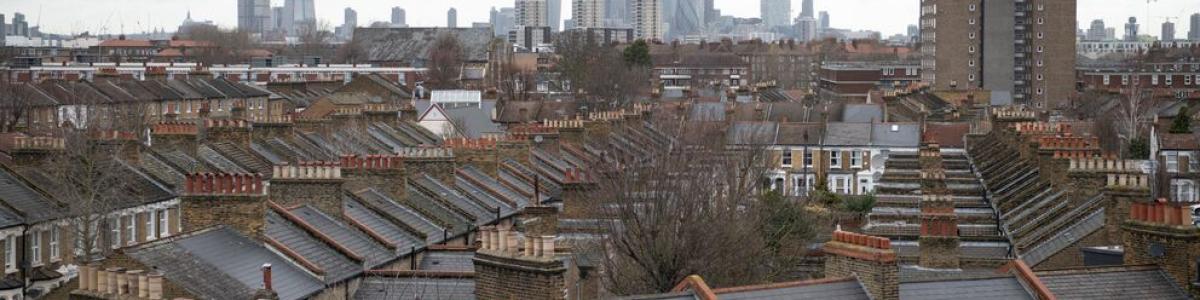
Heating London homes sustainably

The Mayor has an ambitious target for London to reach net zero by 2030.
Net zero is the idea of reducing our carbon dioxide emissions down to zero. In other words, the amount of harmful emissions we add to the atmosphere should be equal to or less than what we take out.
Did you know that heating homes and buildings with oil, gas or coal produces the biggest source of carbon emissions in the UK?
City Hall is working with local councils to create Local Area Energy Plans. These plans set out how your local council can help reach net zero. It will include the views of experts and Londoners, and explore more sustainable solutions.
Join in the discussion below and help shape your Local Area Energy Plan.
- After taking our survey, which energy-efficiency measures would you most likely consider for your home, and why?
- Imagine you were to upgrade or replace your current heating system to make it more energy efficient - perhaps you already have. What are the main challenges or barriers you could think of? What would help mitigate these?
- Heat networks (also known as district heating) supply heat from a central source to consumers, via a network of underground pipes carrying hot water. Would you like your borough to install a heat network? Why or why not?
- Anything else you’d like to share on this topic?
This discussion is co-moderated by Emma and Isobel from City Hall's Infrastructure team.
The discussion ran from 09 January 2024 - 18 February 2024
Closed
Other opportunities to have your say
London’s AI future
Artificial intelligence (AI) is changing how we live and work. Share your experience and ideas and help us shape London’s AI future.
Discussion | Closing soon

AI and jobs
Help inform the Mayor's AI and Jobs Taskforce. Tell us about your experience of AI at work and in daily life.
Survey | Closing soon
Want to join our next discussion?
New here? Join Talk London, City Hall's online community where you can have your say on London's biggest issues.
Join Talk LondonAlready have an account?
Log into your accountJackiquine
Community Member 2 years agoAs I live in a flat the idea of a system turning on the washing machine during quieter times sounds worrying. According to my smart meter my washing machine uses just a small amount of electricity. What would need to be installed and run...
Show full commentAs I live in a flat the idea of a system turning on the washing machine during quieter times sounds worrying. According to my smart meter my washing machine uses just a small amount of electricity. What would need to be installed and run for little advantage and saving.
I have heard that heat pumps are not only large and unsightly and very expensive but were designed to back-up a central heating system, not to be relied on completely as they take around 24 hours to heat a home.
We are told to get a smart meter to help reduce our use of electricity then encouraged to buy electric vehicles. These mixed messages do not encourage trust. The whole thing feels rushed and desperate, like ULEZ.
It feels that the rush to be "carbon neutral" could be to the disadvantage of many, especially for someone like me who lives in an flat in an older building. Any plans should put people first and improve their lives, not put a burden of cost and possibly less efficient system that cannot be individually controlled.
Show less of commentAndrew Bosi
Community Member 2 years agoMost important is the ability to dry washing outside and in the winter this requires an early morning wash
RainD
Community Member 2 years agoLots of us who're in flats don't have any outside space so we can't dry washing outside
Show full commentLots of us who're in flats don't have any outside space so we can't dry washing outside
Show less of commentLes Moore
Community Member 2 years agoLiving in council owned flat on a medium sized estate my opinion would be of minimal weight in any decision but I would strongly prefer a local heat network as this would provide the best option for carbon reduction if green electricity and...
Show full commentLiving in council owned flat on a medium sized estate my opinion would be of minimal weight in any decision but I would strongly prefer a local heat network as this would provide the best option for carbon reduction if green electricity and storage batteries were the chosen fuel. The benefit would be shared across the whole community and it would be possible to compel leaseholders to comply and pay towards costs.
Show less of commentIsobel City Hall
Official Co-Moderator 2 years agoHi Les Moore,
Thank you for taking the time to write this comment, it is really useful to understand your feelings towards heat networks.
Isobel, City Hall
moretree5
Community Member 2 years agoSection L of the London plan includes energy efficiency standards. These standards could further be tightened by improving shade from wide balconies, the eaves of roofs and thicker wall and roof insulation of half a metre. Underfloor...
Show full commentSection L of the London plan includes energy efficiency standards. These standards could further be tightened by improving shade from wide balconies, the eaves of roofs and thicker wall and roof insulation of half a metre. Underfloor insulation is already there in my home but for new homes there is no excuse but to put the maximum amount because the long term benefits would be greater. New builds should also reduce the amount of heat bridges for instance post boxes, locks, door-knockers, and copper pipes. Heat bridges are part of the design of homes so I am hopeful that new builds will have the most energy efficient design. The only reason we are even having this conversation is because of the work of Green Party members of the London Assembly over 20 years ago.
Show less of commentdinomick
Community Member 2 years agoHeat pumps batteries and insulation and solar panels are nothing to be scared of. They are here and they work, but expensive. I’m only at stage 1 (insulation) because I can’t afford to rip out gas central heating that still works and the...
Show full commentHeat pumps batteries and insulation and solar panels are nothing to be scared of. They are here and they work, but expensive. I’m only at stage 1 (insulation) because I can’t afford to rip out gas central heating that still works and the roof is wrong for solar. There’s a way to add a heat pump if you’ve got the space so you only burn gas for a top up. I don’t have the space. would I like to help save the planet because I am old and probably in two generations time it will be extreme weather, climate refugees and conflict such that we have not seen. I will miss all that. Good luck kids.
Show less of commenthestonlad
Community Member 2 years agoI'd be interested in hearing more about hybrid heat pumps - using the heat pump most of the time but having the capability of supplementing it with gas on a few days a year which might get over the trauma of re-piping and replacing...
Show full commentI'd be interested in hearing more about hybrid heat pumps - using the heat pump most of the time but having the capability of supplementing it with gas on a few days a year which might get over the trauma of re-piping and replacing radiators at the same time as installing the heat pump.
Show less of commentTLWotcha
Community Member 2 years agoThe survey is completely flawed because it does not really address the huge costs involved and limitations of existing technology.
Solar PV cannot be installed on dormer lofts and don't work effectively on most pitched roofs.
Heat pumps don't...
Show full commentThe survey is completely flawed because it does not really address the huge costs involved and limitations of existing technology.
Solar PV cannot be installed on dormer lofts and don't work effectively on most pitched roofs.
Heat pumps don't work effectively on uninsulated homes with solid brick walls (the majority of London houses) so, you have to completely strip your home to insulate and fit new radiators. Fit underfloor heating and insulation. Then give up space for a hot water cylinder, and a pump room for the heat pump system itself. Probably have to lift floors and tiles to replumb everything, make good and redecorate. You are looking at costs of 25-30k before you are done. That's not going to work. We need to stop pretending a tiny grant for the heat pump itself is going to cut it. Maybe it will for the lucky ones who have a modern build.
We need a solution that can effectively replace a combi boiler.
Show less of commentrichardt135
Community Member 2 years agoBefore upgrading heating, it’s much better to look at upgrading insulation, which you can do gradually alongside other renovations. Improving insulation will cut your energy use each and every year even if you stick with your existing gas...
Show full commentBefore upgrading heating, it’s much better to look at upgrading insulation, which you can do gradually alongside other renovations. Improving insulation will cut your energy use each and every year even if you stick with your existing gas boiler. Every little helps! If you are unsure where to start, best advice is to contact a local retrofit advisor.
Show less of commentTLWotcha
Community Member 2 years agoUpgrading gradually does not solve the overall cost issue, in fact it makes it worse. It also does not solve the design issues.
Local retrofit advisors do not have the required knowledge to deal with old properties. 100+ year old properties...
Show full commentUpgrading gradually does not solve the overall cost issue, in fact it makes it worse. It also does not solve the design issues.
Local retrofit advisors do not have the required knowledge to deal with old properties. 100+ year old properties typically solid brick walls with lime mortar. They are designed to breathe to allow moisture to flow through a wall. Most modern insulation is designed to prevent breathing. In correct insulation could well cause major damp problems. LBWF retrofit project did not even consider this fact. There is simply not enough knowledge.
There are so many problems I can't address there all in here. Sure there may be solutions but at what cost ?
Show less of commentrichardt135
Community Member 2 years agoIt does sounds like you’ve had a bad experience and I’m sorry to hear that. Our home is also approaching 100 years old, solid brick walls and line mortar. One of the first things the retrofit advisor said to me was to install breathable...
Show full commentIt does sounds like you’ve had a bad experience and I’m sorry to hear that. Our home is also approaching 100 years old, solid brick walls and line mortar. One of the first things the retrofit advisor said to me was to install breathable solid wall insulation and we’re meeting soon to discuss the most appropriate type for the house.
Show less of commenthestonlad
Community Member 2 years agoI once tweeted a response to Michael de Podesta's blog ( recommended - https://protonsforbreakfast.wordpress.com/) about installing external wall insulation on his 1930's solid wall semi in Teddington and suffered from a huge pile on from...
Show full commentI once tweeted a response to Michael de Podesta's blog ( recommended - https://protonsforbreakfast.wordpress.com/) about installing external wall insulation on his 1930's solid wall semi in Teddington and suffered from a huge pile on from people suggesting Kingspan PU foam insulation (?Grenfell) would lead to deterioration of the building fabric over time.
Show less of commentKimm
Community Member 2 years agoBattery and a smart service
Show full commentBattery and a smart service
Show less of commentgrommit
Community Member 2 years agoI would like to install more solar panels and possibly a battery, but suspect it would invalidate our existing FIT solar contract with British Gas.
ewc
Community Member 2 years agoWe are aleady thinking about this issue as we have an old gas boiler. We are considering a heat pump but it seems that they are not very reliable or are expensive. We stayed in ac ottage heate by one and the owner was not all that pleased...
Show full commentWe are aleady thinking about this issue as we have an old gas boiler. We are considering a heat pump but it seems that they are not very reliable or are expensive. We stayed in ac ottage heate by one and the owner was not all that pleased with his system.
As we live in a ground floor flat in a conservatio area we cannot have solar panels.
We already run our washing machine etc when our electricity supplier tells us to.
I think that building standards need to think more about this. Triple glazing on new builds should be compulsory as should be glassed in balconies with the glass being reactive to heat.
Show less of commentOwenW
Community Member 2 years agoI think the actual installation of Heat pumps is very important. It has to be done correctly. Heat Geek are very knowledgeable and train installers.. you can find an installer on their website - they also do great videos on Youtube...
Show full commentI think the actual installation of Heat pumps is very important. It has to be done correctly. Heat Geek are very knowledgeable and train installers.. you can find an installer on their website - they also do great videos on Youtube explaining a lot of the issues: https://www.youtube.com/@HeatGeek When I can afford it i will use a Heat geek installer.. but it will be a while yet.
Show less of commentsimont
Community Member 2 years agoThe survey strangely had no questions about the length of time a return on investment would take. Some technologies clearly have a quicker ROI than others. It is obvious that if the ROI was less than 6 months the take up would be much...
Show full commentThe survey strangely had no questions about the length of time a return on investment would take. Some technologies clearly have a quicker ROI than others. It is obvious that if the ROI was less than 6 months the take up would be much stronger than an ROI of 20 years! ROI for householders is important so why no questions relating to it?
Show less of commentOn a related point I didn't know I didn't have cavity wall insulation until recently. When I discovered I didn't I moved quickly to have it installed. I am sure I am not alone. The question about CWI is always yes/no but should also include don't know!
Like most householders I don't want to be a Guinea pig. PV and solar heating are mature technologies but I doubt that hydrogen boilers are. A question about perception of the maturity of each technology should have been included.
I was expecting a "catch all" question at the end asking if there was any other comments that the person might want to add - but strangely there wasn't one. Why not?
TLWotcha
Community Member 2 years agoThere is no ROI. This is why there is talk about fines or taxes on gas boilers if you don't switch.
RobbySea
Community Member 2 years agoFor existing housing stock it has to be "insulate first". For new stock it is build to highly insulated and airtight standards and install low carbon energy sources.
Once insulated properly, then you can address low carbon energy provision...
Show full commentFor existing housing stock it has to be "insulate first". For new stock it is build to highly insulated and airtight standards and install low carbon energy sources.
Once insulated properly, then you can address low carbon energy provision. Air source heat pumps are great but need a footprint or cradle on the outside of buildings so do not easily work with flats. Batteries are good in principle in charging up on low cost energy but take space and that is at a premium in many flats.
Show less of commentmoretree5
Community Member 2 years agoventilation has not been mentioned so I will mention it.
JS
Community Member 2 years agoThe technology is just not there yet. Heat pumps provide less heat, cost more, take up more space, are noisy - and fitting of such would also require redecoration of the immediate area. There’s always a lot of hot air from the Mayors...
Show full commentThe technology is just not there yet. Heat pumps provide less heat, cost more, take up more space, are noisy - and fitting of such would also require redecoration of the immediate area. There’s always a lot of hot air from the Mayors personal office, so perhaps that could be rigged up to supply heating for Londoners!
Show less of commentmoretree5
Community Member 2 years agoThis has the potential to create jobs and skills in London.
Isobel City Hall
Official Co-Moderator 2 years agoHi JS,
Thank you for taking the time to provide this comment, you raise some interesting points. Yes you are correct that the installation of these new technologies require space, generate noise (although often negligible) and can require cosmetic touchups or redecoration. Heat pump running costs can depend on many factors such as how your heat pump is designed and how it’s operated. Savings on your energy bill can also depend on the original system you’re replacing such as gas boilers or electric storage heaters and the age of these units. You are able to find more helpful information on space requirements, noise levels and running costs on the following website: Heat pumps - Energy Saving Trust.
Isobel, City Hall
TLWotcha
Community Member 2 years agoI would like to see a set of fully costed case studies, including a range of property types from flats to solid brick Victorian semi currently using gas combi.
Full refit including installation of (safe for lime mortar) insulation and heat...
Show full commentI would like to see a set of fully costed case studies, including a range of property types from flats to solid brick Victorian semi currently using gas combi.
Full refit including installation of (safe for lime mortar) insulation and heat pump system.
Show less of commentozzyrob
Community Member 2 years agoI would really like some form of pergola or sunlight reflecting covers installed on my windows which are triple glazed and cover almost the entirety of my east facing new-build flat. Although wonderful at remaining warm in winter, during...
Show full commentI would really like some form of pergola or sunlight reflecting covers installed on my windows which are triple glazed and cover almost the entirety of my east facing new-build flat. Although wonderful at remaining warm in winter, during summer my entire flat feels like like I am living under a magnifying glass and despite both of the flat's main rooms having balcony doors, even after these are opened once the sun moves across at about 3pm, if the temperature outside remains high, I am unable to cool the flat at all during continuous hot weather. I suffer from epilepsy which is aggravated by extremely hot weather and have been forced to purchase and use a small portable air-conditioner to return the flat to a bearable temperature during a heatwave but, even if I was able bodied I would be unable to bear the temperatures of well over 30C the flat remains at until the hot weather finally breaks. I am certain many east facing new-build flats without sunshields experience exactly the same problem, something that will only get worse as global warming continues.
Show less of commentrichardt135
Community Member 2 years agoWhilst external shading would be most effective, you can get window films applied to exisiting glazing to reduce heat gain. It might help. It’s something my brother is looking at doing as he lives in a third floor flat with large windows...
Show full commentWhilst external shading would be most effective, you can get window films applied to exisiting glazing to reduce heat gain. It might help. It’s something my brother is looking at doing as he lives in a third floor flat with large windows and no shading, which overheats in summer. As a country, we have been slow to adapt to the challenges of overheating, although latest Building Regulations do refer to this.
Show less of commentFbmw
Community Member 2 years agoThe cost of installing a new system as we are a pensioner house hold.
Show full commentThe cost of installing a new system as we are a pensioner house hold.
Show less of commentelimag
Community Member 2 years agoI have been though the process of installing an air source heat pump for my 60sqm flat in Lambeth as part of a renovation which included wall and floor insulation and installation of double and triple glazing. It required so much motivation...
Show full commentI have been though the process of installing an air source heat pump for my 60sqm flat in Lambeth as part of a renovation which included wall and floor insulation and installation of double and triple glazing. It required so much motivation and commitment as it feels that everything (regulation, maket maturity, customer protection) is against those who want to make any positive change, despite the progress with government grants. Issues/ paradoxesI had to face:
I think the GLA and local authorities should look at the whole journey that people g through when trying to make their homes more sustainable and focus on the key points where they have influence. The parking cost paradox I described is one example and the unrealistic planning permission process are two examples.
Show less of commentDavebr
Community Member 2 years agoAny provision that offers grants must be much more generous and wide-ranging than anything that has been offered to date and the application process must be much simpler, bearing in mind London's diversity and the fact that many people do...
Show full commentAny provision that offers grants must be much more generous and wide-ranging than anything that has been offered to date and the application process must be much simpler, bearing in mind London's diversity and the fact that many people do not have English as a first language. Your survey was much too complicated for the community members I know and included unexplained complicated phrases such as solar photovoltaic panels.
Show less of commentWillPed
Community Member 2 years agoOur residential block of 51 private flats would benefit from smart meters. But the flats have various energy suppliers, requiring mutliple visits by electricians. The freeholder quite properly requires a fire safety certificate for every...
Show full commentOur residential block of 51 private flats would benefit from smart meters. But the flats have various energy suppliers, requiring mutliple visits by electricians. The freeholder quite properly requires a fire safety certificate for every visit. That isn't going to happen, so no smart meters.
Show less of commentAnonymous
Community Member 2 years agoceddlyburge
Community Member 2 years agoI think a heat pump or a Zeb boiler would be useful. More insulation would be great as well, but tricky / expensive / disprupting to do
Cedders
Community Member 2 years agoThe survey asked about electric boilers, but in my non-expert opinion, they're a bit of a distraction and will be far more power-hungry and expensive to run than a heat pump. The ZEB design looks interesting, but its use really relies on...
Show full commentThe survey asked about electric boilers, but in my non-expert opinion, they're a bit of a distraction and will be far more power-hungry and expensive to run than a heat pump. The ZEB design looks interesting, but its use really relies on time-of-day billing varying a lot, like a night-storage heater. By the time there is more grid and more grid storage, bidirectional EV charging and so on, the difference between night and morning prices might be quite small, so it would cost at least twice as much to run as a heat pump. It might make sense where there is very limited space.
It would be good to have more expertise to advise on insulation, particularly Victorian solid-wall properties. 'QBot', the robot to insulateunder floors looks good.
Show less of commentTcarroll
Community Member 2 years agoHeat networks are not the way forward- they will simply be another over budget, late project which causes insufferable traffic disruption on top of the existing shambolic management of roadworks in London. Heat networks in new-build...
Show full commentHeat networks are not the way forward- they will simply be another over budget, late project which causes insufferable traffic disruption on top of the existing shambolic management of roadworks in London. Heat networks in new-build communities could work, but I do not trust energy companies to run them in the interests of people. The first step in reducing emissions is reducing consumption through insulation and better thermostat systems in homes which would allow only the rooms being used to be heated- too many homes have the thermostat in the hallway which does not reflect the mean temperature of the home. I think that the future is hydrogen and this needs to be pushed- surely the existing gas network can be used to distribute hydrogen without having to dig up everything at huge cost and hassle? I like the idea of local co-operatives running their own local energy infrastructure and would strongly support this model if it was on a hydrogen/geothermal system.
Show less of commentCedders
Community Member 2 years agoGood point about thermostatic radiator valves. Hopefully people have cut their bills by having TRVs fixed or fitted where they aren't already working. I don't think heat networks necessarily need a lot of digging of roads - surely they can...
Show full commentGood point about thermostatic radiator valves. Hopefully people have cut their bills by having TRVs fixed or fitted where they aren't already working. I don't think heat networks necessarily need a lot of digging of roads - surely they can serve blocks of flats or houses in the same vicinity, with residents participating from the start? I also like the idea of local co-ops, owned by residents, with any profits being used the way they decide.
Show less of commentI'm sure that hydrogen is not the future for home heating, despite a lot of misinformation by boiler manufacturers and gas suppliers (see Desmog). Suppose you have a source of clean energy, producing hydrogen via electrolysis is perhaps 50% efficient, and assuming it doesn't escape, therefore heats your home at about 50% efficiency. Whereas a heat pump typically can use the same clean electricity at 300% efficiency - for each kWh, it sucks in 2 kWh from air or ground or water or geothermal or waste heat. Plus boilers, pumps etc would need to be changed for H2. There are some applications for H2, like in industry or seasonal storage, but it doesn't make any sense in home heating.
Churchman
Community Member 2 years agoThey have heat networks in Russia. They don't work there. Its socialism on stilts.
Tcarroll
Community Member 2 years agoIt's interesting to read the challenges in using H2 in home heating- did not know it was not so straightforward. Heat pumps are great so long as the electricity to power them is generated from clean sources, otherwise the emissions are just...
Show full commentIt's interesting to read the challenges in using H2 in home heating- did not know it was not so straightforward. Heat pumps are great so long as the electricity to power them is generated from clean sources, otherwise the emissions are just being moved elsewhere. Also I feel that it is importnat to remember that substituting fossil fuels with electricity as a fuel source does reduce the fossil fuel consumption but that is replaced with electricity as a fuel. Governments are betting on electricity to replace gas and oil without focusing on supply (some similarities with H2). It is great that we can import electricity from cleaner sources in other countries (i.e. Norway/France) but as we move to a more digital and emission-free world the global demand for electricity is going to outstrip the global supply by a great deal. Biomass was also listed as an option in the survey but it is also riddled with misinformation (Panorama episode worth watching) and I definitely would not call it emission or carbon free.
Show less of commentCedders
Community Member 2 years agoThanks for the reply. Yes, biomass - eg wood pellets - can do more harm than good unless it's waste wood from your own land - rather unlikely in London I think, and bad for air quality!
Show full commentOn heat pumps, I think the running costs are currently...
Thanks for the reply. Yes, biomass - eg wood pellets - can do more harm than good unless it's waste wood from your own land - rather unlikely in London I think, and bad for air quality!
Show less of commentOn heat pumps, I think the running costs are currently similar, but you would be making a carbon saving in the UK so it's not quite that 'the emissions are just being moved elsewhere' (ie to a gas-fired power station).
Again thinking in terms of efficiency, say burning gas in a combined-cycle turbine is 50% efficient (and you have 10% power loss in the grid, similar to 10% loss in your boiler), but then at the moment only about 50% of generation is gas (it's declining and was much less over Christmas). Therefore the energy delivered to the home for heating has a similar carbon footprint for gas and heat pump - but that's forgetting the Coefficient of Performance of a heat pump delivers 3x as much heat for that input energy, hopefully to the right places. So heat pumps can drastically cut emissions even now, and can be effectively zero-carbon when electricity is fully decarbonised. Yes, a lot more electricity generation and grid capacity is needed - the National Grid say they have that in hand.
chris.denning
Community Member 2 years agoI think special consideration needs to be given to blocks of leasehold flats. We have a communal heating system in the basement (gas-powered) that I suspect has its own inefficiencies, e.g. in the heat lost distributing the hot water...
Show full commentI think special consideration needs to be given to blocks of leasehold flats. We have a communal heating system in the basement (gas-powered) that I suspect has its own inefficiencies, e.g. in the heat lost distributing the hot water throughout the building. Moreover, we're all forced to use that so have no option to switch to other suppliers or types of heating for example.
I think our building would be ideal to have solar panels on the roof as well, but the chances of us getting the freeholder / management company to do that are slim, and they would probably take most of the income themselves.
It would be great to have legislation forcing freeholders of suitable buildings to allow energy-efficiency schemes and pass the savings onto leaseholders.
Show less of commentChurchman
Community Member 2 years agoIt would be better if individuals had control of how they heated their own flats.
moretree5
Community Member 2 years agoIf there is communal heating, the Grenfell disaster shows that management needs to listen to residents. There should be justice for Grenfell, to prevent another high rise fire like this happening again.
Show full commentIf there is communal heating, the Grenfell disaster shows that management needs to listen to residents. There should be justice for Grenfell, to prevent another high rise fire like this happening again.
Show less of comment